







4 TIPS TO OPTIMALLY PREPARE YOUR HORSE FOR COMPETITION AND HOT DAYS
Article Courtesy Cavalor The summer season is wonderful. Long evenings, plenty of competitions, and more time to enjoy horses and equestrian sport….
Free Delivery when you spend $99 or more. (Weight Limits Apply – view more)

 Dog
Dog

Shop Tuckers great range of dog food, health care & wellness products today. Delivered or Click & Collect.
 Cat
Cat

Tuckers has a great range of cat food, health care & litter products for your beloved cat. Shop now.
 Horse
Horse
Tuckers carry a huge range of food, supplements, health care, hoof care and grooming accessories. Shop now.
 Chook/Bird

Tuckers range of food, accessories & health care products will keep your chooks & birds happy and healthy.
 Small Animal

Shop food and health care products for your little mates @ Tuckers. Delivered or Click & Collect.
 Farm/Garden

Tuckers carry a wide range of sheep & cattle products, plus everything you’ll need around the farm or garden.
Dog
Shop Tuckers great range of dog food, health care & wellness products today. Delivered or Click & Collect.
Cat
Tuckers has a great range of cat food, health care & litter products for your beloved cat. Shop now.
Horse
Tuckers carry a huge range of food, supplements, health care, hoof care and grooming accessories. Shop now.
Chook/Bird
Tuckers range of food, accessories & health care products will keep your chooks & birds happy and healthy.
Small Animal
Shop food and health care products for your little mates @ Tuckers. Delivered or Click & Collect.
Farm/Garden
Tuckers carry a wide range of sheep & cattle products, plus everything you’ll need around the farm or garden.
Courtesy CEVA

Summer usually fills our calendar with public holidays and family focus, and as equestrians we have no doubt that spending more time with your horse is on the cards!
But the downside is that summer also brings heat, which can mean that even small rides out on the trail can build up the sweat levels – both for you and your horse. And while sweat is not necessarily bad (in fact, it is necessary to cool you and your horse down), excess sweat and exertion can lead to heat stroke and dehydration, resulting in a visit with your vet.
Here are some handy tips to keep you and your horse safe when riding in summer weather:
It is important you know your horse’s typical temperature, heart rate, and respiration rate throughout different seasons. Ensure you have an appropriate rectal thermometer in your medical kit and keep a record of their heart rate and respiration rate before and after work, as well as after cool down (which should be similar to the before work readings). This will allow you to identify when something is significantly abnormal and help you with your decision to seek emergency support.
Typical health measures
Resting Heart Rate (adult horse): 30-40 beats per minute
Respiratory Rate (adult horse): 8-15 breaths per minute
Temperature: 37.4-38.4 degrees Celsius
Dehydration doesn’t occur just because of sweat, but excess exercise and sweating may result in dehydration. A simple test you can perform is the “tent test”. This is where you pinch the skin on neck (about mid-way), or high or low on the shoulder. A healthy horse should see the skin snap back into the original position immediately. If the skin stays “tented” for 1 or more seconds, this is a sign of lack of fluids.
Other signs include:
Sweat doesn’t just mean the loss of water, but also the loss of important electrolytes, like sodium, potassium, and chloride. These electrolytes are important for nerve and muscle function as well as other bodily functions, so ensuring we restore what is depleted with heat and work is important. On those sweatier moments, providing electrolytes plus water will help reset some of those imbalances caused by warmer days or workouts and help prevent or decrease the likelihood of emergencies.
Handy tip: Energetic Isotonic Oral Powder for Horses is an electrolyte powder that you mix into water. It comes in a handy foil pack that you can pop into your saddle pack on your trail ride – meaning you don’t have to carry a water bottle for yourself AND your horse, just mix what you need when!
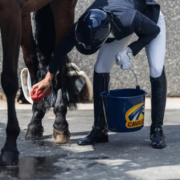
This should be part of your routine after any working session but even more critical when the external heat is at it’s highest. Hose down, provide shade, and monitor their vitals until they are back within normal ranges.
And don’t forget to look after you tack! The sun, heat and sweat can damage your gear, and risk making them uncomfortable or even unusable.
Look after yourself, your horse and your gear this summer and keep hydrated!
With heat comes sweat, and its own range of complications. Here are out top tips to reduce the impact of the heat on your horse.
Entire range - quick and secure delivery
Buy securely online and pickup at your local store
Call your local store and come on down to pickup
© 2026 Tuckers Pet & Produce.